Crappie: Complete Species Guide
Ask a hundred American anglers which freshwater fish they'd most like to see on the dinner plate, and crappie finishes near the top of nearly every list. Crappie fishing is also one of the easiest ways to fill a stringer: these fish school in huge numbers, bite eagerly, and swim in almost every state.
This complete crappie guide covers how to identify both crappie species, where they live, what they eat, how big they get, and the best ways to catch them. New to the sport? Start with our fishing for beginners guide — crappie are one of the best first targets there is.
What Is a Crappie? The Two Crappie Species
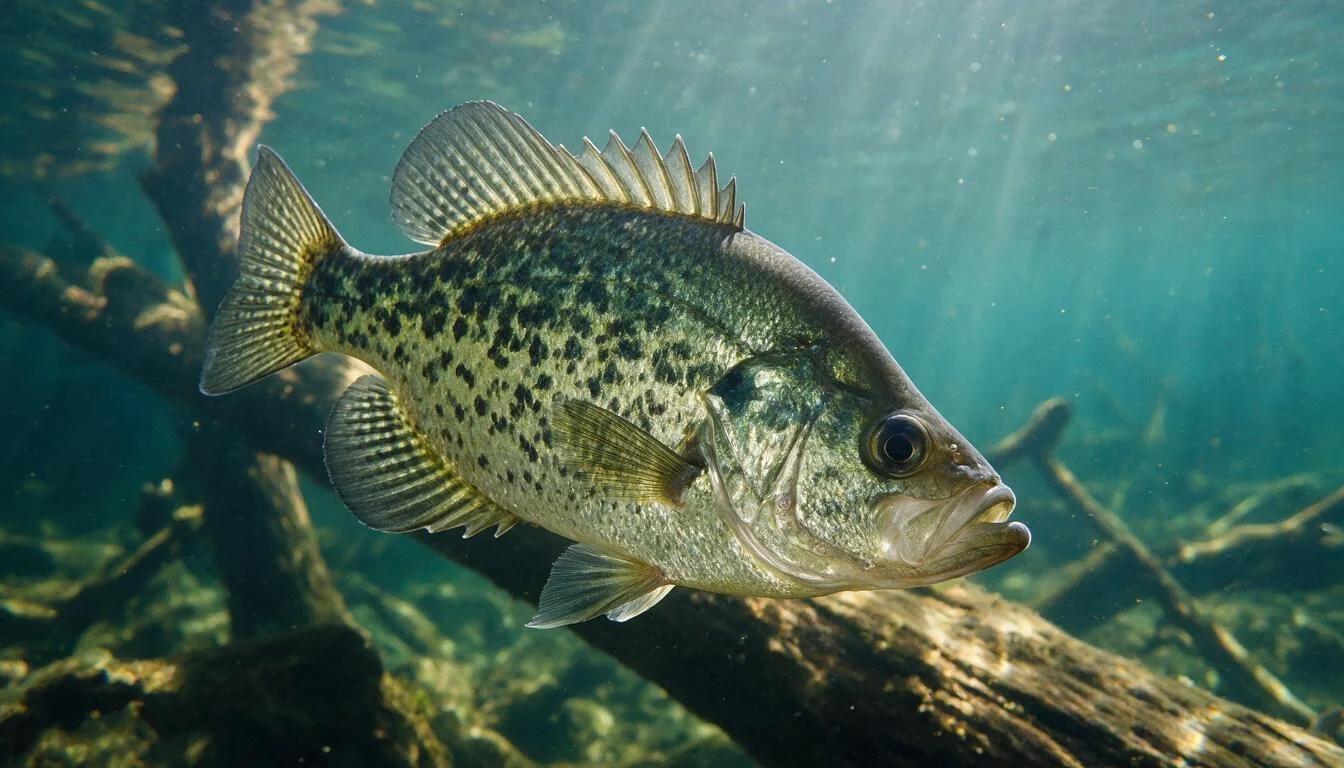
Crappie are small, deep-bodied panfish in the sunfish family (Centrarchidae) — the same family as bluegill and largemouth bass. Two crappie species live in North America: the white crappie (Pomoxis annularis) and the black crappie (Pomoxis nigromaculatus).
Both share the same profile: a tall, compressed body, a large mouth, and a thin, paper-like membrane around the lips that earns them the nickname "papermouth."
You'll also hear them called speckled perch (Florida), strawberry bass, calico bass, or sac-a-lait (Louisiana). Whatever the local name, they share three traits that make them so popular:
- They school. Crappie gather in large, size-matched groups, so when you find one, you usually find dozens.
- They're easy to catch. Light line, small baits, and patience are all it takes — no specialized skill required.
- They're delicious. Firm, white, flaky fillets make crappie one of the best-eating fish in freshwater.
White Crappie vs Black Crappie: How to Tell Them Apart
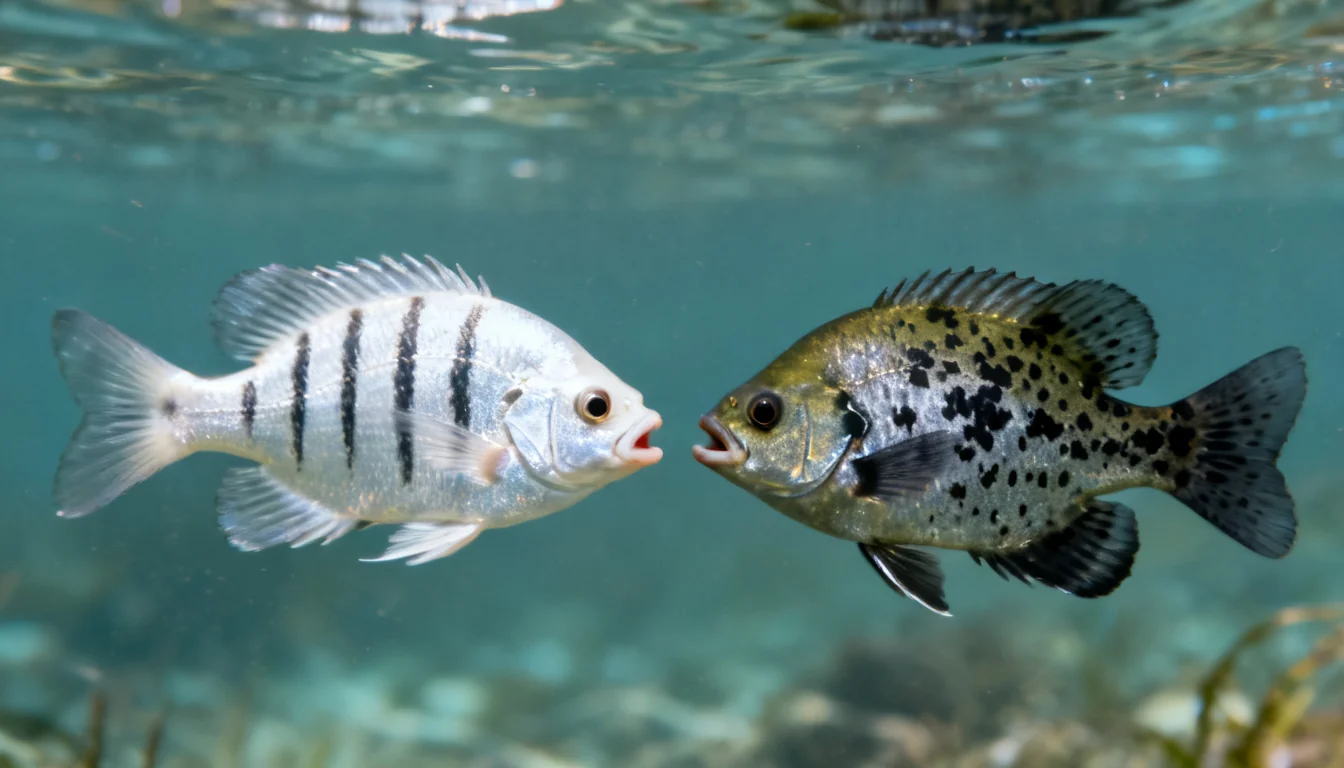
The two crappie species look similar at a glance, but identification is simple once you know the two key differences: the pattern on the body and the number of spines in the dorsal (back) fin.
| Feature | White Crappie | Black Crappie |
|---|---|---|
| Body pattern | Dark vertical bars or bands | Irregular dark blotches (mottled) |
| Dorsal spines | 5-6 | 7-8 |
| Body color | Silvery with a greenish tint | Silvery-olive, often darker |
| Preferred water | Tolerates turbid or murky water | Prefers clearer water |
| Typical habitat | Larger lakes and reservoirs | Lakes with more vegetation |
The quickest field test: count the dorsal spines. Six or fewer means white crappie; seven or more means black crappie. The body pattern confirms it — vertical bars on a white crappie, scattered blotches on a black crappie.
Crappie Behavior & Habits
Understanding how crappie live explains almost everything about catching them.
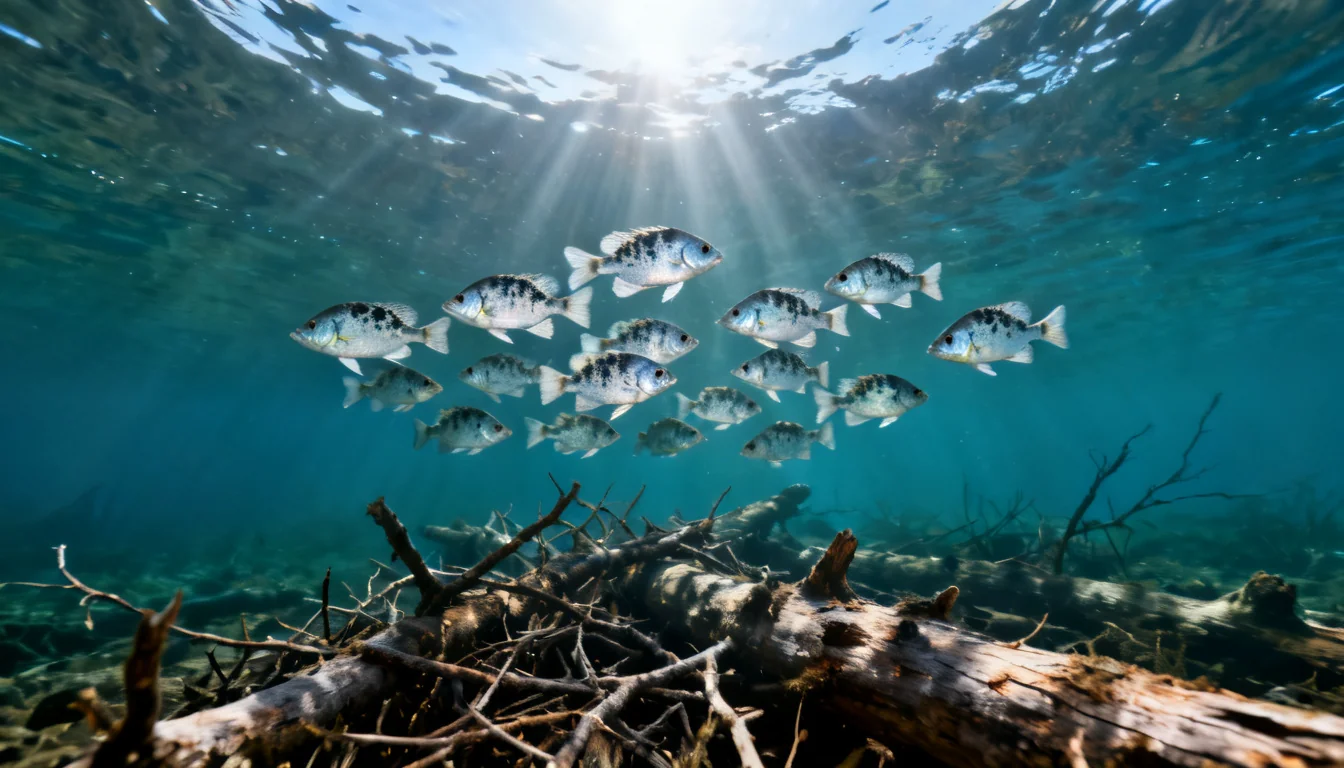
Schooling fish. Crappie travel in schools organized by size. A school of 10-inch fish rarely mixes with a school of 6-inch fish, which is why one spot can produce a limit of slabs and the next produces only dinks.
Low-light feeders. Crappie have large, sensitive eyes — they see well in dim light and are dazzled by bright sun. Expect the best feeding at dawn, dusk, and on cloudy days, with more night activity in summer and in clear water.
Seasonal movers. Crappie follow a predictable annual cycle driven by water temperature:
| Season | Where They Are | What They're Doing |
|---|---|---|
| Spring | 1-6 ft, near shore cover | Spawning — shallow nesting colonies once water hits the mid-50s to low 60s (°F) |
| Summer | 15-30 ft, suspended near structure | Holding deep; feeding at dawn, dusk, and night |
| Fall | Mid-depth, following shad schools | Heavy feeding before winter |
| Winter | Deep, tight to structure | Slow and sluggish; groups compress near brush and timber |
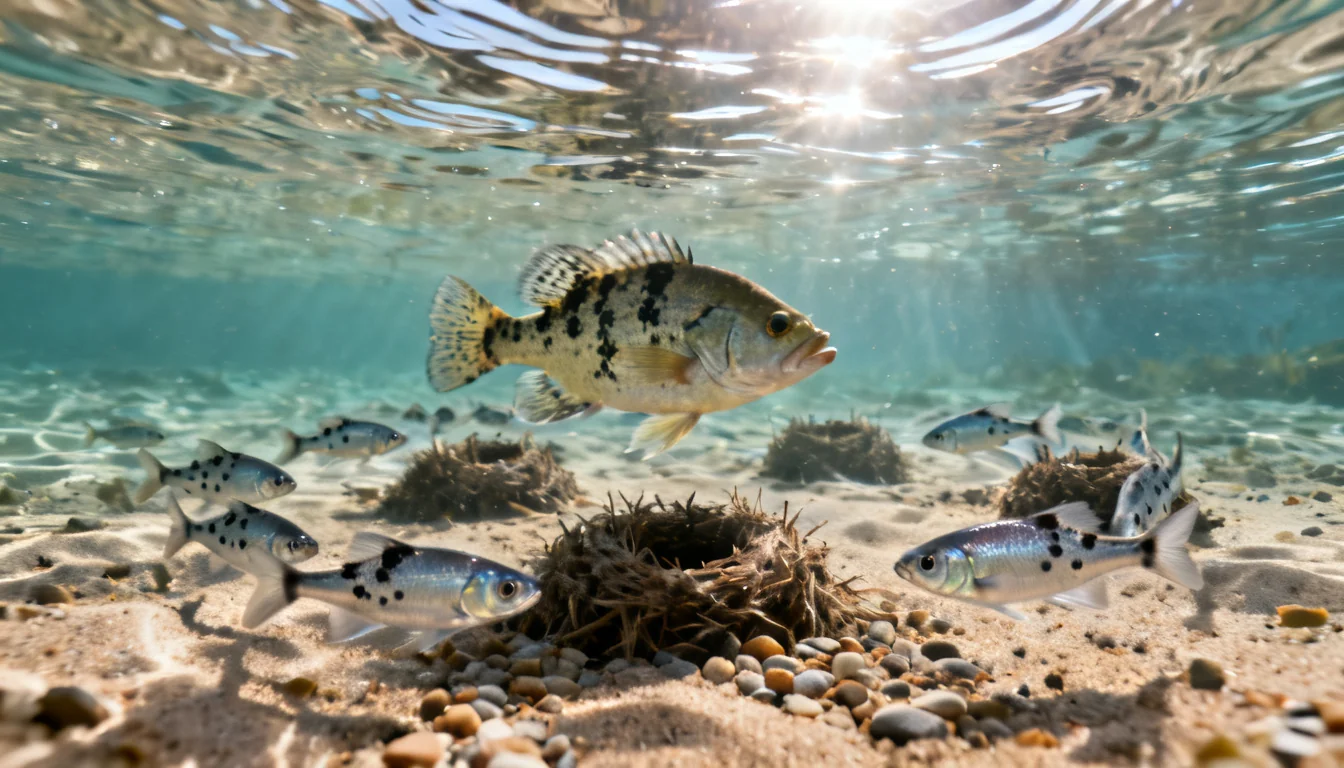
Colony spawners. Crappie are unusual among sunfish: instead of lone nests, dozens of males build nests close together in shallow water, often over sand, gravel, or firm mud near cover. Males guard the eggs and fry for a few days. This spring crappie spawn is the easiest and most popular time of year to catch them.
Crappie Habitat: Where They Live in the US
Crappie are native to the eastern and central United States, from the Great Lakes and Mississippi River basin down to the Gulf states. Thanks to more than a century of stocking, they now live in all 48 contiguous states — in reservoirs, natural lakes, farm ponds, and slow-moving rivers.
Crappie habitat centers on one word: structure. In any water body, crappie hold near:
- Submerged timber and standing dead trees
- Brush piles and man-made fish attractors
- Weed beds and grass lines
- Docks, piers, and boathouses
- Creek channels and river drop-offs
They also suspend in open water over deep structure — a school of crappie often hangs 5-15 feet above a brush pile in 20-30 feet of water, which is why a fish finder helps so much.
Famous crappie waters include Weiss Lake in Alabama (nicknamed the "Crappie Capital of the World"), Kentucky Lake and Lake Barkley on the Tennessee/Kentucky border, Grenada Lake in Mississippi, and South Carolina's Santee Cooper lakes.
What Do Crappie Eat?
What do crappie eat? Everything small enough to fit in their mouths — and their mouths are large for their size.
- Small fish — shad, minnows, and young bluegill make up the bulk of an adult crappie's diet in reservoirs
- Aquatic insects and larvae — important in natural lakes and ponds, especially in spring
- Small crustaceans — freshwater shrimp, scuds, and tiny crayfish
- Zooplankton — the main food of young crappie under about 3 inches
Because crappie feed heavily on baitfish, the classic rule applies: find the bait, find the crappie. In spring, schools of crappie often follow shad right into the same shallow pockets where they spawn.
How to Catch Crappie
The complete tactics guide is in our companion article — How to Catch Crappie — but the short version is remarkably simple:
- Use light gear. An ultralight rod, 4-8 lb line, and small hooks are standard.
- Fish small. Tiny jigs (1.5-2.5 inch soft plastics on 1/32-1/16 oz heads) and live minnows account for most crappie caught.
- Go shallow in spring. The spawn puts crappie within easy casting range of the bank.
- Go deep in summer. Vertical jigging over brush piles and timber in 15-30 feet of water is the summer pattern.
- Slow down. Crappie rarely chase; they prefer baits that fall slowly and pause.
Crappie Size: How Big Do They Get?
Crappie size varies with latitude and forage, but the averages are consistent nationwide:
- Typical catch: 6-12 inches, 1/4 to 1 lb
- A solid fish: 1 lb (roughly 12-13 inches) — a good day's keeper in most lakes
- A trophy: 2 lb or more; a 3-pounder is the fish of a lifetime for most anglers
Southern crappie grow faster (reaching 10 inches in 2-3 years) but live shorter lives; northern crappie grow slowly and live longer. The all-tackle world record white crappie is 5 lb 3 oz, caught at Enid Lake, Mississippi, in 1957; black crappie records hover around the 6 lb mark. In practice, a 2-pound crappie earns bragging rights in any state.
Are Crappie Good to Eat? (Crappie Recipes)
Yes — crappie are hard to beat on the dinner plate. Their fillets are white, firm, mild, and nearly bone-free, which makes them perfect for the classic Southern preparation: cornmeal-breaded and pan-fried until golden. Crappie also grill and bake well, and their size makes them ideal for fish tacos.
Many states enforce minimum size limits (commonly 9-10 inches) and generous daily limits — often 10-30 crappie per angler, because the fish gather in dense schools. Always check local regulations, and see our crappie recipes collection for ways to turn your catch into dinner.
Crappie FAQ
How long do crappie live?
Most crappie live 4-7 years in southern waters and up to about 10 years in the North. The oldest recorded crappie reached roughly 15 years — rare, since crappie are heavily harvested.
Do crappie bite at night?
Yes. Crappie have large, light-sensitive eyes and feed comfortably in the dark. Summer night fishing with glowing jigs or minnows under a light is a proven tactic, especially in clear water.
How deep do crappie go in summer?
In summer, crappie typically hold at 15-30 feet, suspended near brush piles, timber, and creek channels. They move shallower to feed at dawn, dusk, and night.
What size crappie should I keep?
Keep the 9-12 inch fish — legal in most states and perfect eating size. Many states enforce minimums of 9-10 inches and daily limits of 10-30 fish; check your state's regulations before you keep any.
Is crappie fishing good for beginners?
It's one of the best beginner fisheries in America: crappie school in numbers, bite small baits readily, and live in almost every lake and pond. Light tackle, a bobber, and a bucket of minnows are all a first-timer needs.
The Bottom Line
Crappie are small, schooling panfish that punch far above their weight: they're found in every state in the Lower 48, easy to identify, simple to catch on light tackle, and delicious on the plate.
The spring spawn puts them shallow, summer pushes them deep, and a tiny jig or live minnow catches them year-round. Grab an ultralight rod and find a brush pile — the next school could be your best meal of the week.